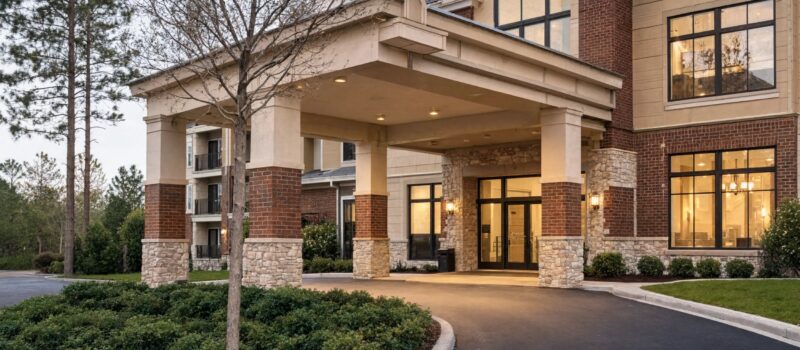
Senior housing occupancy has continued to strengthen, and that is welcome news for the industry. It is also a good reason to take a closer look at your capital reserve analysis.
According to NIC MAP data reported by NIC, senior housing occupancy surpassed 90% nationally in the third quarter of 2026, reaching 90.4%. NIC also reported that this marked the 21st consecutive quarter of occupancy gains across senior housing categories. Independent living, assisted living, and active adults all improved, and more than half of the primary markets tracked by NIC MAP were above 90% occupancy.
Those numbers reflect a market that has largely moved beyond recovery and into a new stage of demand.
For owners and operators, that creates obvious benefits and burdens.
Stronger occupancy can improve cash flow, strengthen operating performance, support rent growth, and increase confidence among boards, investors, and lenders. After the disruption of the past several years, a fuller community is a positive sign.
It also places more responsibility on the physical plant.
High occupancy does not reduce capital risk. In many cases, it increases it. A building that is fuller is also being used more intensively. Mechanical systems run harder. Elevators carry more traffic. Kitchens, laundry areas, plumbing systems, common spaces, parking areas, life safety systems, and emergency power systems all support more residents, staff, visitors, and daily activity.
A community can be performing very well from an occupancy standpoint while its building systems are quietly moving closer to major capital needs.
That is why this moment in the market deserves careful attention. NIC has also reported that construction activity remains far below what will be needed to keep pace with future demand. Current development levels are meeting only a small portion of projected annual need, which means existing communities will carry a large share of the industry’s near-term growth burden.
This trend is expected to continue
In practical terms, the buildings already operating today will need to serve more residents, remain competitive longer, and support higher expectations from residents and families. That is a very different challenge than simply filling available units.
It means the condition of existing assets matters more.
Senior living operators are already adapting to this supply-demand imbalance. In a recent Senior Housing News article, operators were described as working in a market where traditional occupancy growth may no longer be the easy lever it once was. As more communities fill, organizations must focus on efficiency, expense management, repositioning, and operational performance.
The same logic applies to the physical asset.
If a community cannot rely on broad new supply to absorb demand, then existing buildings must be maintained, modernized, and planned for with greater discipline. Deferred maintenance becomes more consequential. Outdated infrastructure becomes harder to ignore. Capital planning moves from a back-office budgeting task to a strategic operating concern.
This is where a Capital Reserve Analysis becomes particularly important.
A Capital Reserve Analysis looks further ahead. It evaluates major building systems, estimates remaining useful life, forecasts replacement timing, and helps quantify future capital needs. That allows leadership to understand not only what needs attention now, but what is likely to require funding over the next several years.
It helps connect market performance to building readiness.
That connection is essential in a high-occupancy environment. A community with strong demand may be tempted to focus primarily on revenue growth, pricing, staffing, and resident experience. Those priorities are important, but they all depend on the building’s ability to function reliably.
If an aging HVAC system begins to fail, resident comfort is affected. If elevators become unreliable, operations are disrupted. If roofs, windows, or exterior envelope systems allow water intrusion, repairs can become more expensive and more disruptive. If life safety systems, generators, or fire protection components are not properly maintained, risk increases quickly.
These issues do not become less important because occupancy is strong. They become more important because there is less room for disruption.
Strong occupancy should therefore prompt leadership to ask a second set of questions.
- Is the physical plant prepared to support this level of demand?
- Are major systems approaching replacement?
- Are capital reserves aligned with current costs?
- Are the highest-risk items clearly identified?
- Are future projects sequenced in a way that minimizes disruption?
- Are building conditions being evaluated with the same discipline as operating performance?
The organizations best positioned for the next several years will be those that treat the physical plant as part of the growth strategy. They will understand that existing communities are becoming more valuable because replacement is difficult, but also that those communities must be managed with greater care.
High occupancy is a strong signal that demand is real.
A current assessment tells you whether the physical plant is prepared to keep supporting that performance tomorrow.